

The Emotional Connection I Nearly Missed
On meeting teens where they are, not where we want them to be.

The other day, I was talking with my therapist about how desperately I want to maintain a connection with my 14-year-old son.
He’s doing that retreating thing that teens so often do, and it’s become harder to get information out of him. He does open up, but it’s often about a topic I don’t care or know much about. Soccer. Video games.
A few days before my therapy session, I remembered something I read in Lisa Damour’s book The Emotional Lives of Teenagers, which was this: Teens like to connect on their own terms. Damour wrote about it in the context of timing, explaining that parents often want to have conversations with teens at times convenient for them — right after school, during dinner – whereas teens often prefer to connect at times convenient for them, which might be (argh) right before our bedtime. Damour encourages parents to allow teens to do the choosing — to let these conversations happen when teens want them to, even if they’re at an inconvenient time for parents.
It occurred to me then that teens also like to connect on their own terms in terms of topic. Recently, while in the car, my son started excitedly talking about his favorite video game, Clash Royale. Normally, my ears turn off when he does this, and my mind starts wandering. On that particular day, he had gotten into a new arena in Clash Royale, which apparently is a Very Big Deal if you care about Clash Royale (I do not).
I sure didn’t want to listen to a ten minute play-by-play about this accomplishment. But this time, I forced myself to listen to him with an open mind, and I even asked some follow-up questions. I noticed that my son got really excited by my interest, and animatedly told me all about what had happened.
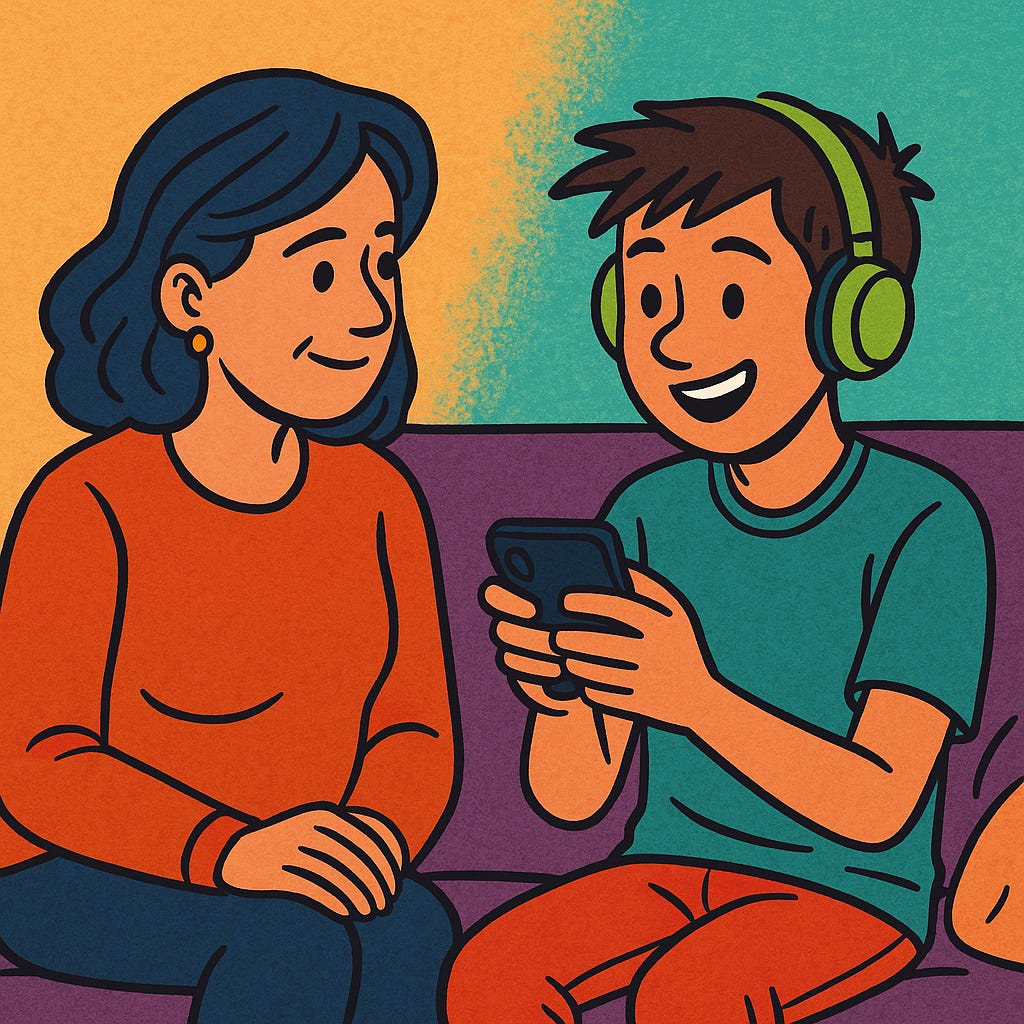
Later that afternoon, I noticed that my son sought me out to talk even more — something he rarely does. The conversation was initially again about Clash Royale, but then strayed into other topics. I realized then that you can connect with teens on their own terms when it comes to topic, not just timing — and once you do, it can create a gateway to other types of connection and topics of conversation.
But this realization was nothing compared with what came next, when my therapist asked a simple question and — well, totally blew my mind.