


Hi everyone. Today I’m re-sharing a newsletter I wrote two years ago. Drowning is not a fun topic, but it’s an important one. There are many misconceptions about how and why kids drown. I hope you find this helpful, and please share!
—
My son has almost drowned twice, and both times, it was my fault. He had been frolicking in the shallow end for 45 minutes in both cases. Then I got distracted for a minute, and when I glanced back, he was gone. There were multiple people in the pool with him each time, some within a couple of feet, a few of them relatives — and nobody saw that he had drifted back to where the water deepened and had sunk below the surface. The only reason I noticed was because when I looked for him, he wasn’t there.
These two experiences are among the most traumatic of my life, and they were pretty scary for him, too. Thankfully, he was fine, at least physically. But the incidents proved to me that drowning kids don’t call for help; they don’t kick or splash. They just sink and quietly disappear. They also revealed to me that swim lessons — which my son had taken after the first near-drowning — weren’t failsafe, and having adults around simply isn’t enough. I want to dig into the data on these two realizations in more detail today, because to me, at least, they were surprising. And they are crucially important, because more American kids die from drowning than from car accidents; drowning is the leading cause of death in kids ages 1 to 4.
Swim Lessons Are Not a Panacea
I have absolutely nothing against swim lessons — I think they’re crucial, and both my kids have taken them. But swim lessons can be dangerous if they cause caregivers to become overconfident about their kids’ abilities and watch them less closely.
In a 2014 study, researchers repeatedly surveyed parents over the course of eight months as their preschoolers took swim lessons. As the kids acquired more lessons, parents began to believe that their kids knew how to keep themselves safe in potentially dangerous water situations — that they were, for instance, good judges of their own swimming ability and knew to stay away from pools when unsupervised, which aren’t things that swim lessons generally teach.
The parents also began to assume that their kids needed less careful watching around water, which isn’t always true, either. In another study, researchers asked parents to judge how well their kids had mastered various swim skills in their lessons and found that parents overestimated one in every five skills. (This overestimation of swimming competence tends to be especially bad among fathers.)
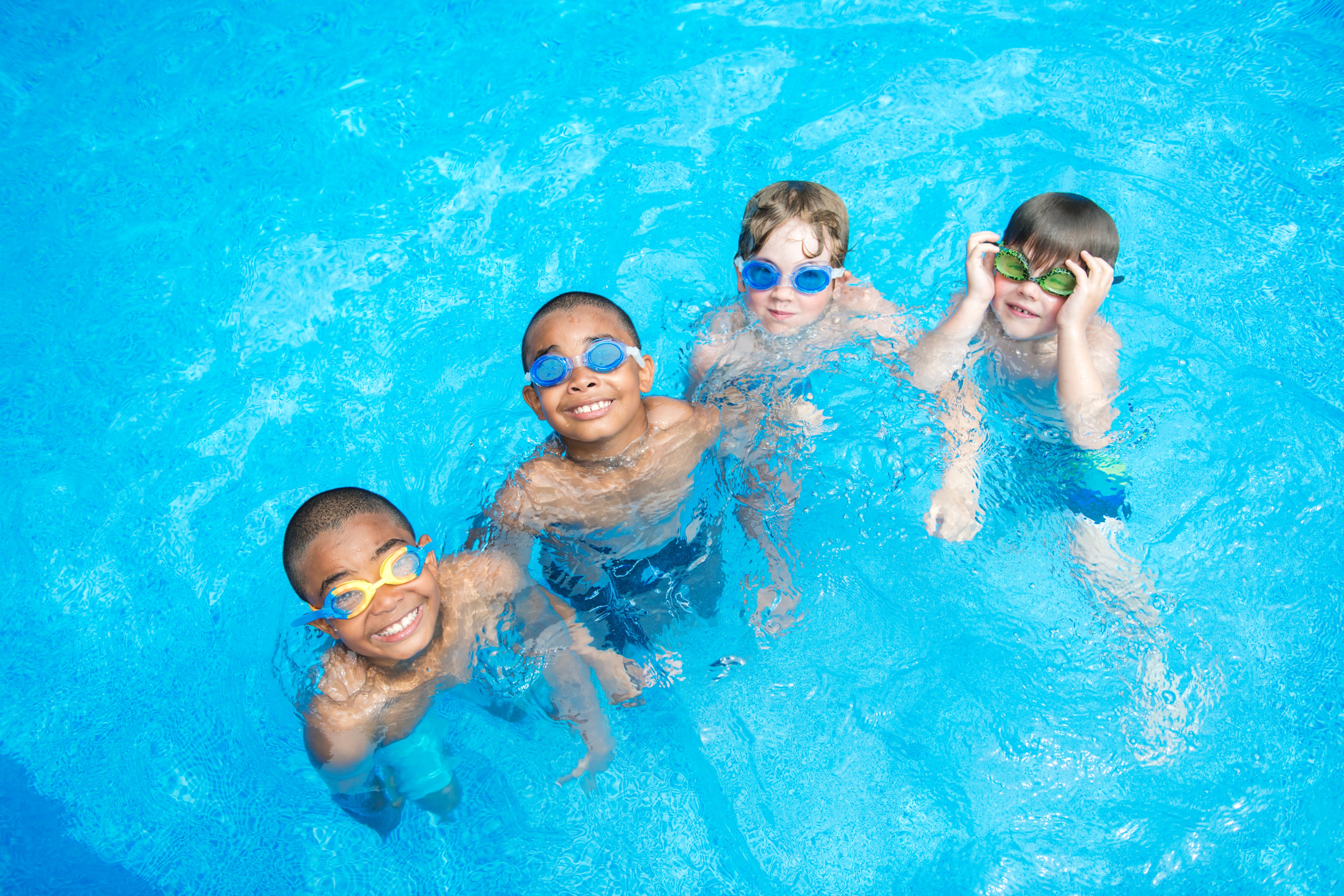
In a recent technical report on drowning prevention, the American Academy of Pediatrics warned about this phenomenon, noting that “parental perceptions regarding necessary levels of supervision change as children progress through swim training, potentially to the detriment of the child’s safety."
Why aren’t kids who take swim lessons safe? Because, in part, young kids typically don’t learn survival skills in swim classes. “Mostly, what these lessons do is prepare the child for swimming by making them comfortable in the water — getting their face wet, going under the water — and teaching them some rudimentary skills,” said Barbara Morrongiello, a professor at the University of Guelph in Canada who studies parent safety practices and drowning prevention, when I spoke to her a story I wrote for Slate.
There’s nothing wrong with this; if classes foster a love for water play and swimming, that’s great. What’s bad are parents’ assumptions that the classes do more. “Swimming programs for youngsters under four shouldn’t really be considered a drowning prevention strategy,” Morrongiello explained.
That’s because the ability to survive a near-drowning typically requires more than just the types of water skills that keep children afloat in normal swim situations. Kids might drown because they’re really tired, have gotten a muscle cramp, or have been injured during water play — and they need to learn what to do in these specific situations to stay safe. Children are also especially at risk after falling into water fully clothed, because clothes make swimming more difficult. Cold water has the same effect. Last summer, my nine-year-old daughter, whom I’d considered to be a strong swimmer, had to be rescued by a lifeguard during a swim test at camp in a very cold lake.
So even if your kid has had ample swim lessons, don’t assume that you can leave them be in the water — or half watch while you’re chatting with friends. Which brings me to my next point.
When kids drown, adults are usually nearby — just not fully paying attention
A few days ago, my wonderful former journalism student Anna Gibbs wrote a powerful piece for Slate highlighting the data showing that most child drownings occur when adults are close by. She writes:
More often than not, children drown in the presence of their guardians, not their absence. A study back in 2004 that analyzed the drowning deaths of 496 children under 14 years old showed that, alarmingly, only 10 percent of the victims were completely unsupervised when they drowned — in other words, 90 percent of the children who died had an adult nearby who did not see the drowning occur. Drowning happens right under the noses of parents who, often, are aware that their child needs to be monitored in the pool, and who are trying their best to do so.
That’s because it doesn’t take much of a distraction to render supervision ineffective. “It’s the knock on the door,” says Amy Peden, a drowning prevention researcher at the University of New South Wales in Australia. “It’s the call on the phone.”
Gibbs talks about the many and various ways adults get distracted: They use their phones, they do household chores, they socialize with other adults. She also cited data suggesting that roughly 40 percent of drownings happen in the presence of other children, perhaps because there’s a notion of safety in numbers. Sometimes, though, kids swimming with other kids can put everyone more at risk. A couple of years ago, in yet another near-drowning episode — this one less scary because I saw it as it was happening and acted fast — I had to jump into the pool to rescue my daughter and her cousin while they were playing in a hotel pool together. Her cousin had accidentally floated into deep water and grabbed my daughter for support, which pulled them both down. And yes, we were at a hotel pool surrounded by adults — but no one but me noticed them as they disappeared under the surface.
When Gibbs asked Sarah Denny, the pediatrician at Nationwide Children’s Hospital who headed the AAP’s technical report, when parents could safely ease up on supervision — would a 13-year-old who’s a strong swimmer be okay on their own? — Denny firmly responded: “If someone is in the pool, they need to be supervised at all times.”
Here’s Gibbs again:
As kids become more competent swimmers, drowning does become less likely, Peden says. But getting older brings other factors into play, such as substance use, swimming in natural (and riskier) bodies of water, and overconfidence. Denny recalls once when her son hopped in the pool at the beginning of a summer and swam across it, a lap he had done in past years. Halfway across, unaccustomed to the swim, he started to sink; she jumped in with her clothes on. After toddlers, adolescent boys are the most at risk of drowning. In fact, at all ages, boys are more likely to die by drowning than girls, usually about twice as often. But once they become teenagers, that jumps to almost 10 times as often.
I realize that this may all sound very scary. And you know I don’t like causing parents anxiety. Going by the numbers, most of your children will be just fine as they swim this summer, but I do think it’s important to be aware of the data and to understand what close supervision really means and why it’s essential. If this information helps to save one child this summer — or prevents one of you from having a terrifying close call — it will, to me, have been well worth it.
What are your thoughts or experiences? Share in the comments!


My son slipped into the deep end just where his feet couldn't touch and I was sitting right there on the side of the pool talking to him. Suddenly the lifeguard is standing up and shouting are you ok and I realize she's talking to my kid. She noticed that he had his face pointed up trying to breathe. Even though I was there and paying attention I didn't really know what to look for to know he was in danger. Scary!
I also recall something going around social media a few years ago that had different colors of swimsuits in various bodies of water (pool, lake) and how they looked both on the surface and under the surface. That was an eye opener because the colors you would think would be extra visible were not! That's worth looking for.
It’s frustrating to me that swim lessons do not focus on water safety. To me, the whole goal of learning to swim is being safer around water. Do you have any sense of why that’s not a prime goal of swim lessons? For parents with limited time & money, paying for years of swim lessons that show little progress is challenging.